Spinning
Beyond the Charkha
For many people in India, spinning is closely associated with the charkha and the framework of khadi. While this remains an important part of the history, it represents only one of many ways of engaging with fibre.
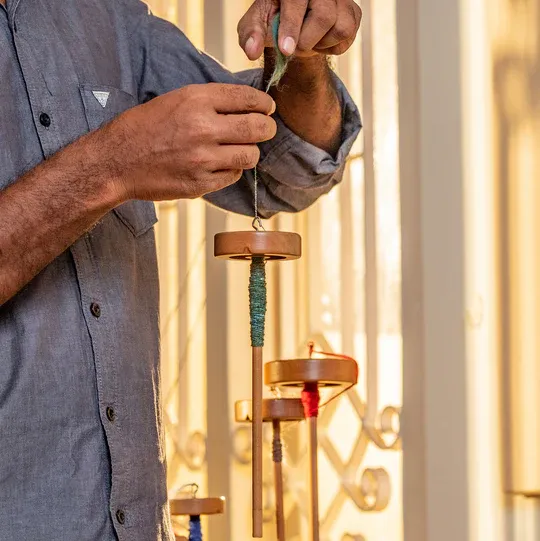
Modern spinning systems open up a much wider field of exploration, from creating custom yarns and fibre blends to investigating alternate materials, textured yarn structures and material behaviour.
For knitters, weavers, designers, researchers and fibre enthusiasts, hand spinning opens up possibilities that begin long before yarn reaches the loom or knitting needle.
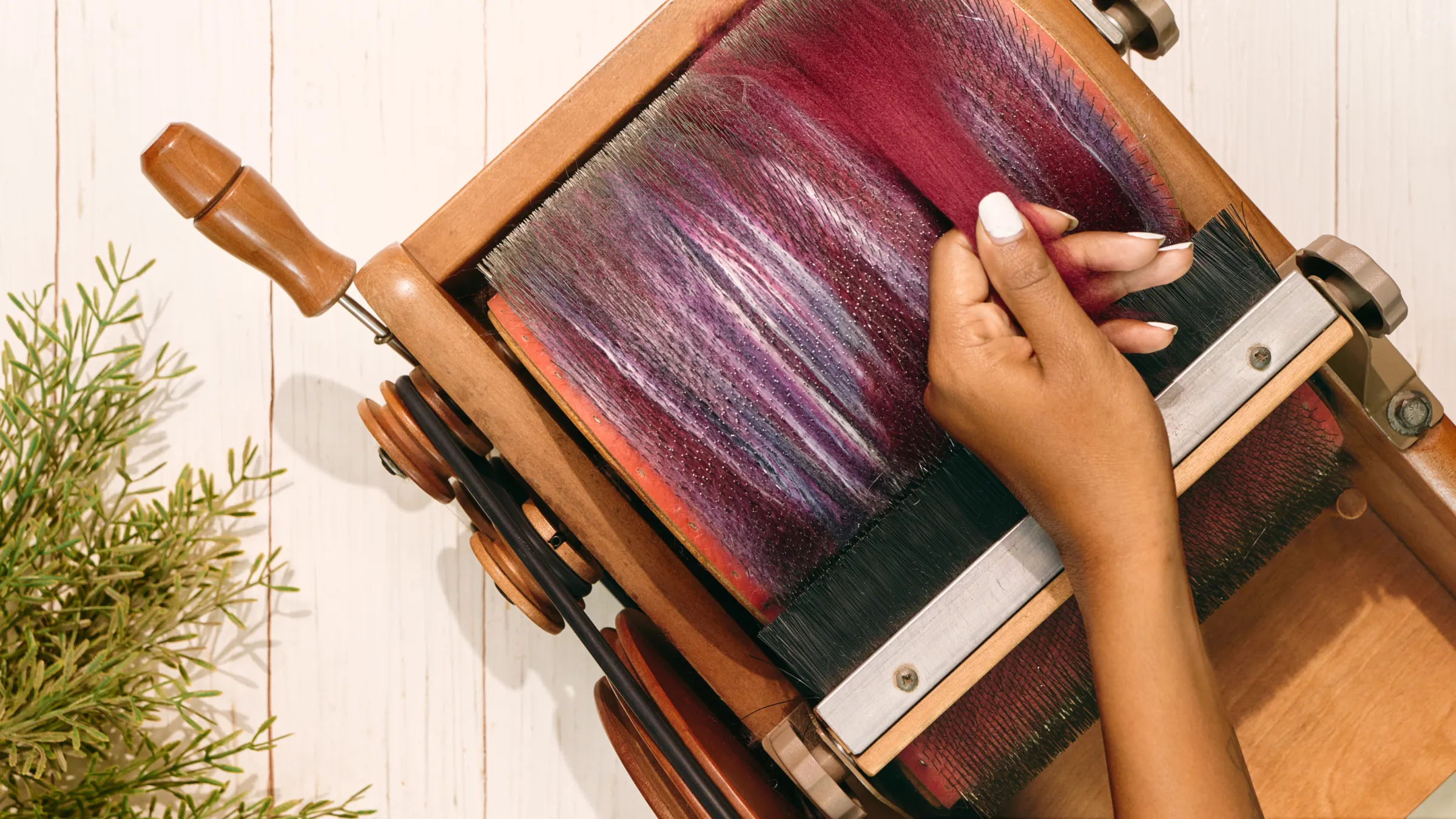
WHY SPIN?
People take to spinning for different reasons.
Some want to create yarns that cannot be purchased commercially. Others are interested in controlling colour, texture, fibre blends and yarn structure. Designers and makers often use spinning to develop original materials for their work, while slow-fashion practitioners are drawn to a deeper understanding of how textiles are created.
Others simply become curious about how fibre becomes yarn.
Whatever the starting point, spinning changes the relationship with material.
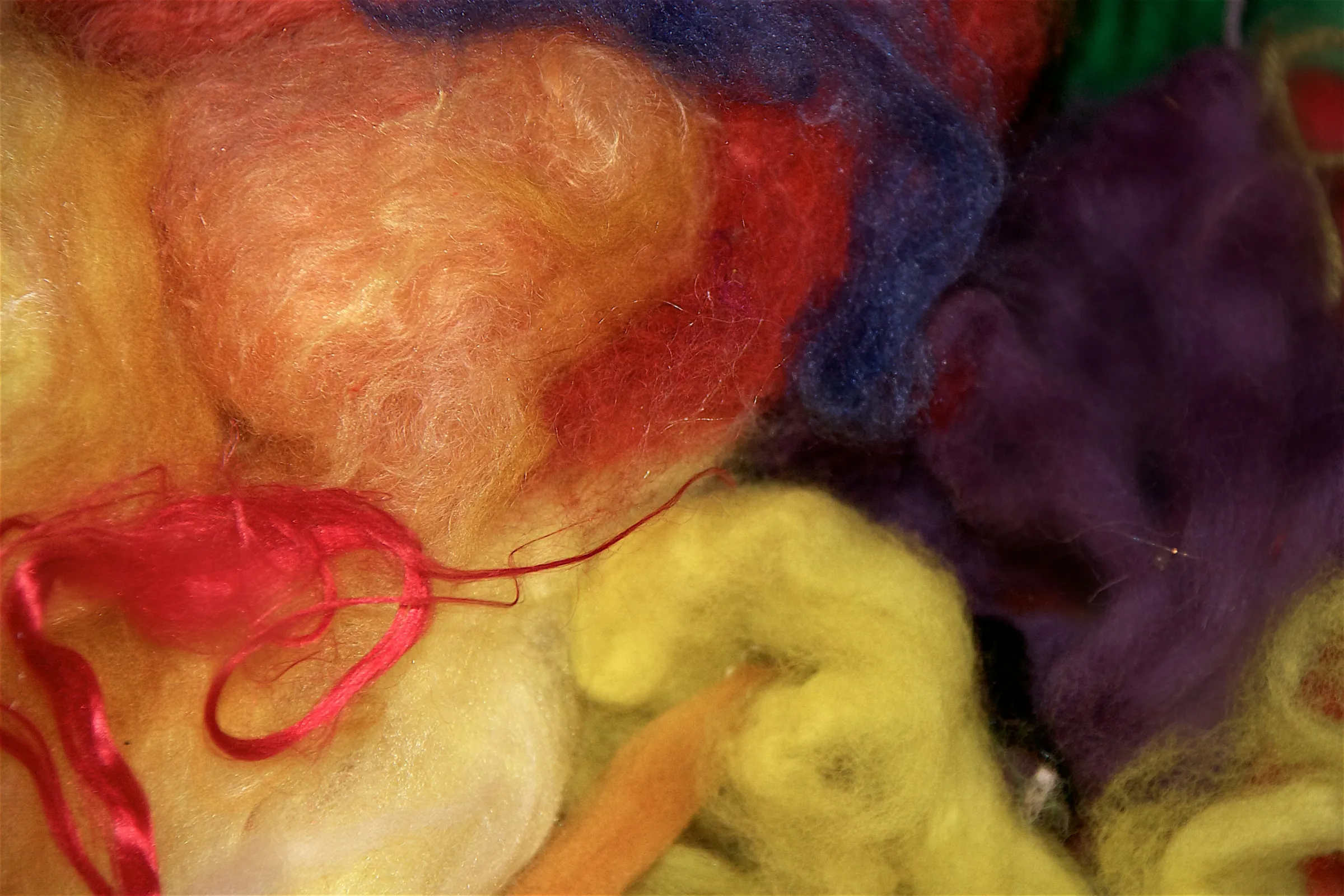
EXPLORING FIBRE THROUGH PRACTICE
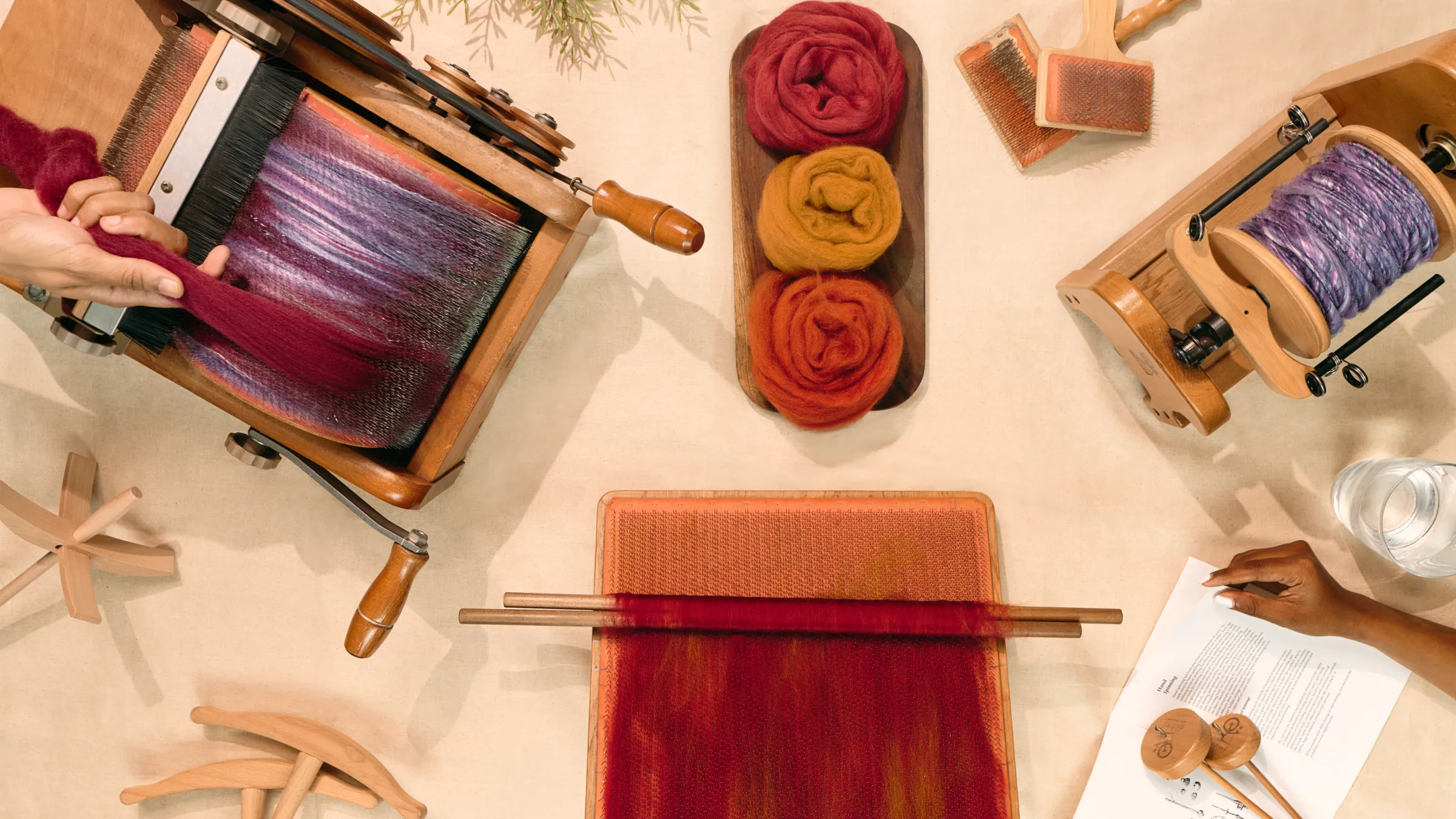
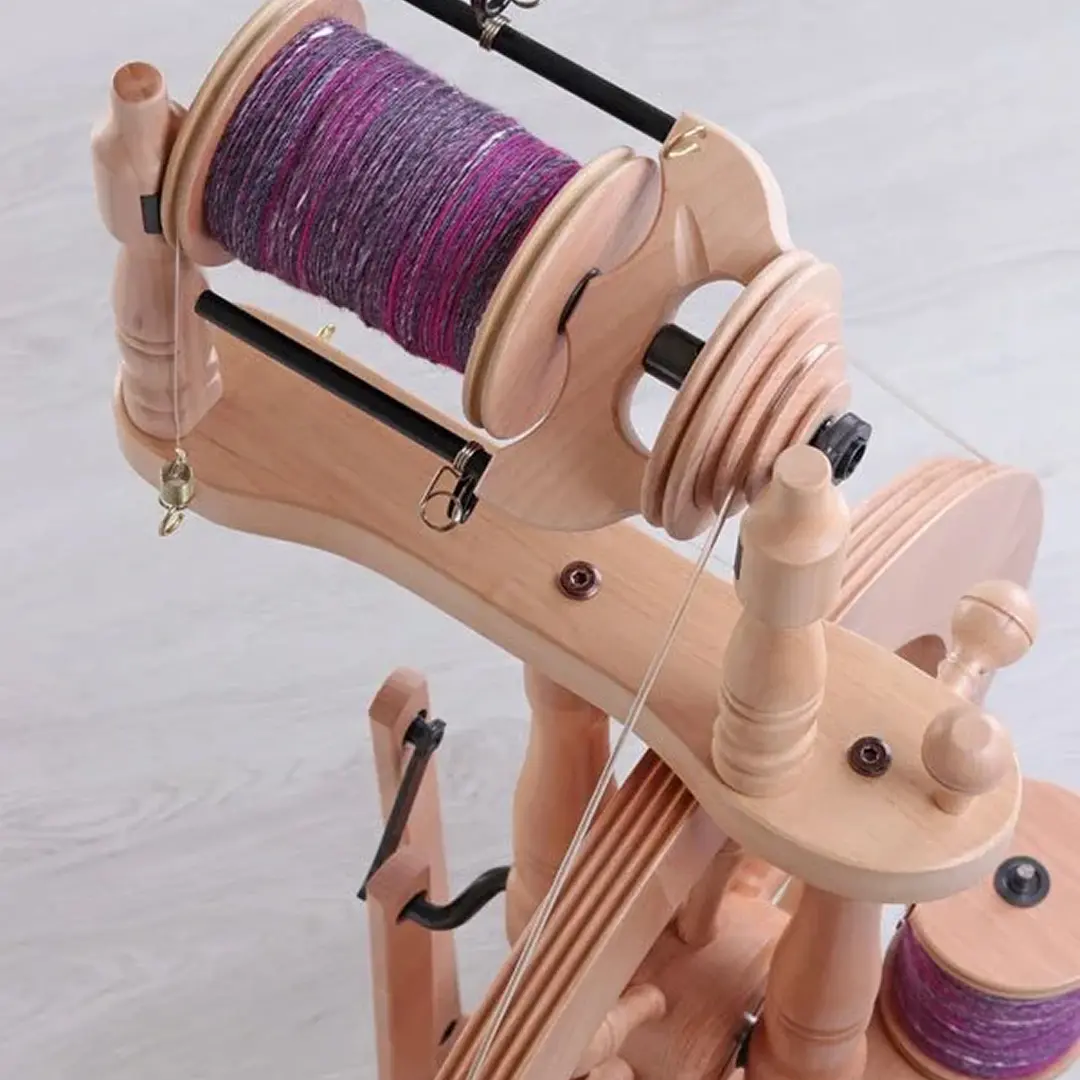
Modern spinning wheels make it possible to work with fibres ranging from cotton, wool, silk and linen to pashmina, eri silk, fibre blends and unconventional materials such as plastics, fabric strips and paper.
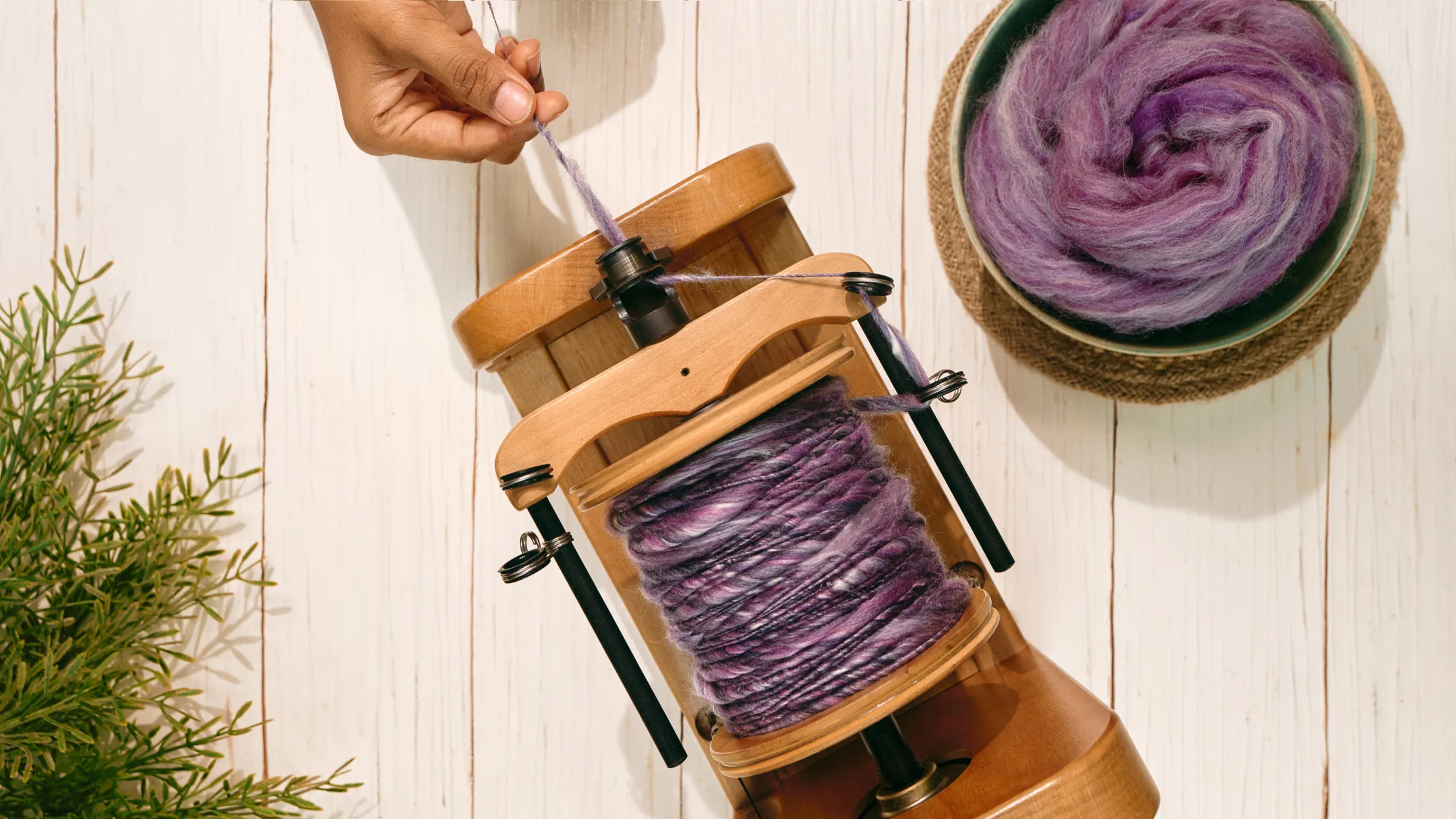
The studio regularly explores fibre preparation, dyeing, yarn construction and material behaviour through hands-on experimentation.
Projects may involve creating custom yarns for weaving and knitting, developing textured yarn structures, blending fibres, evaluating material performance or investigating new applications for unconventional materials.
A TOOL FOR DESIGN & RESEARCH
Spinning is increasingly finding relevance beyond traditional craft practice.
Design students and practitioners use spinning to understand materials more deeply and develop original textile concepts.
Researchers explore fibre behaviour, material performance and alternate material systems.
Organisations working with livelihood-based spinning use modern wheels to improve consistency and quality for high-value fibres.
In each case, spinning becomes a way of thinking through material.
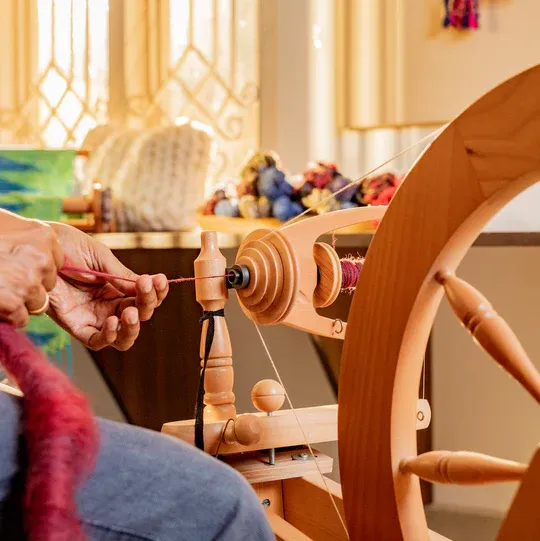
LEARNING TO SPIN
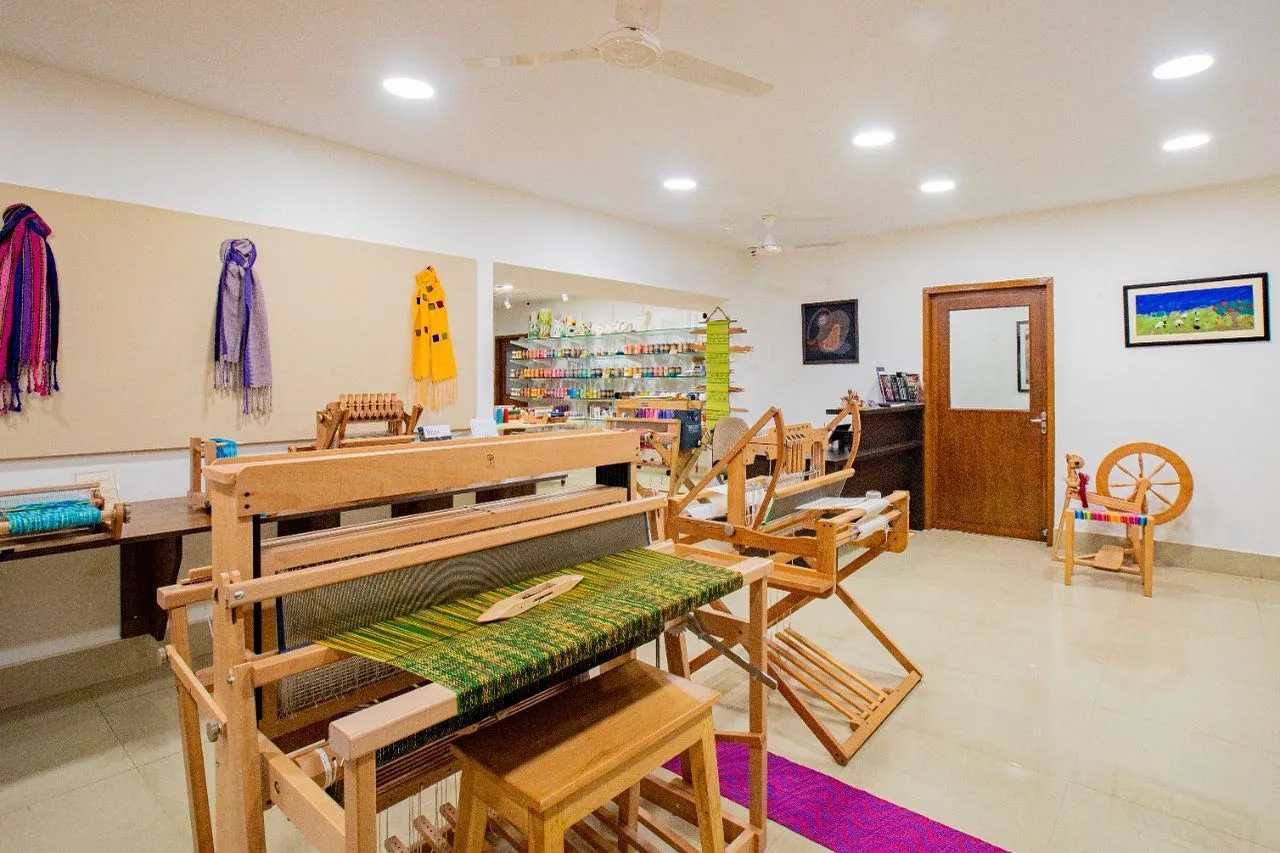
The studio works with both treadle wheels and e-spinners and offers opportunities for beginners and experienced practitioners to engage with spinning.
Whether the interest lies in creating handspun yarns, understanding fibre, exploring alternative materials or developing specialised yarn structures, the studio provides multiple pathways into the practice.
RELATED RESOURCES
-
 View Details: Introduction to Hand Spinning
Introduction to Hand Spinning
- Duration: 3–4 hours
- Fee: ₹2,800
- Venue: Shuttles & Needles studio, Chennai
- Limited batch size to allow focused engagement
- All materials are provided