
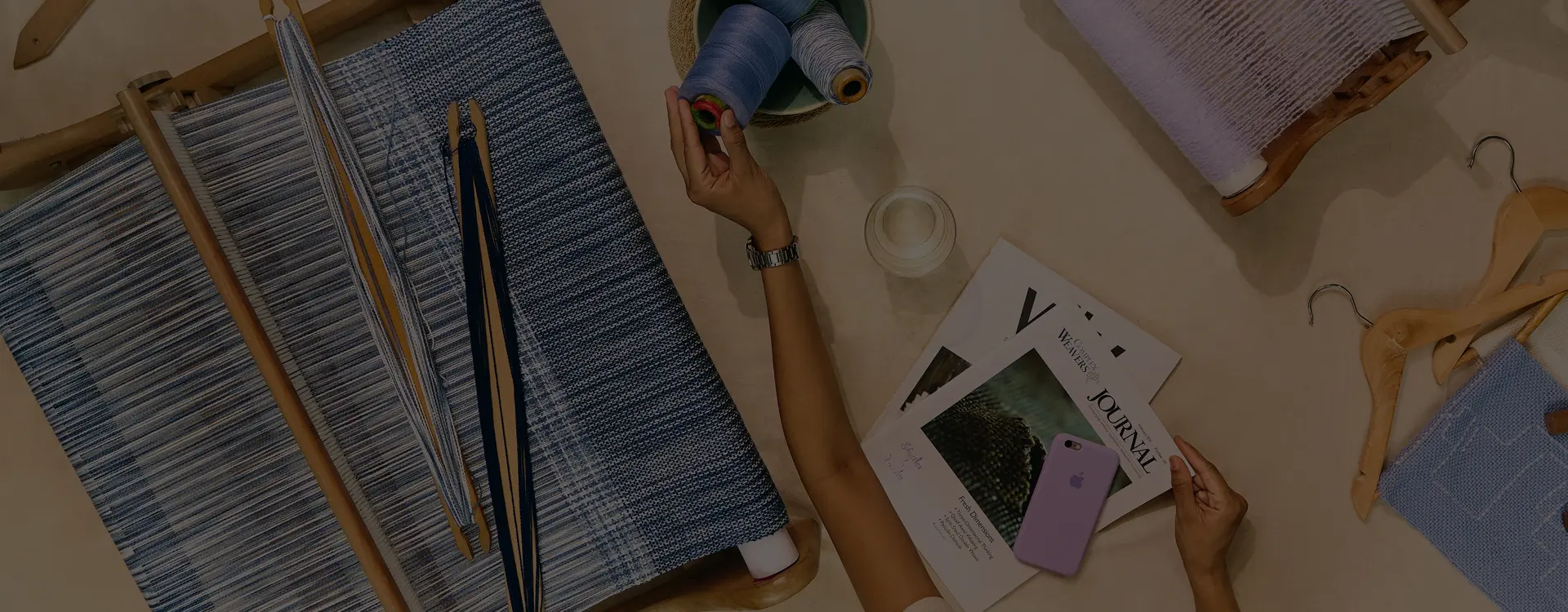
Studio - Looms & Tools
Tools that Support Hands-on Weaving
Good tools make weaving easier. They help you focus on the craft instead of struggling with the equipment.
The looms and tools at Shuttles & Needles are chosen to support weaving across different materials and stages of practice.
LOOM SYSTEMS AT THE STUDIO
The studio is equipped to support work across learning, sampling and design development.
We work with loom systems from Ashford Handicrafts (New Zealand), AVL Looms (USA) and SAORI (Japan). These are used across different kinds of work, from early exploration to more complex structural development.
Alongside looms, the studio maintains tools for warping, fibre handling, spinning and felting. A working yarn and fibre bank supports material exploration and sampling.
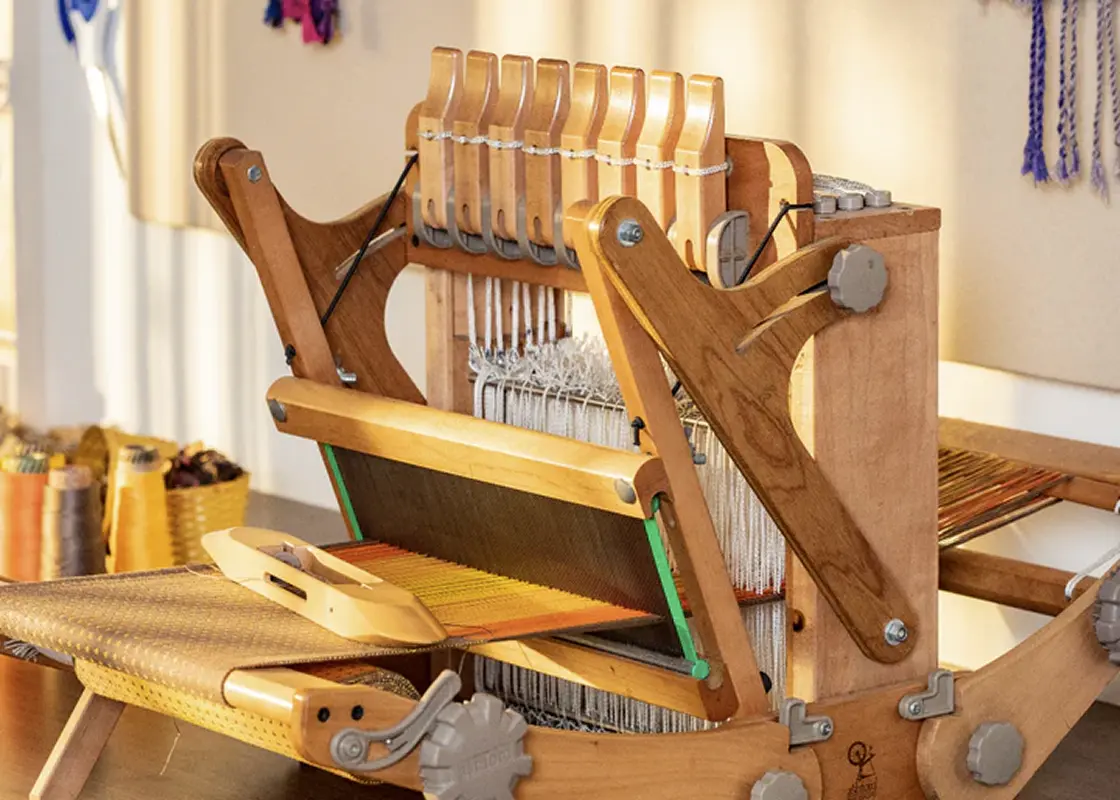
Table Looms
Table looms are used for pattern exploration, design development, and sampling. Their scale allows close engagement with structure and material, making them suitable for learning as well as focused design work.
The studio works with 4-shaft and 8-shaft table looms. Higher-shaft table looms are typically used within design institutions for teaching.
Floor Looms
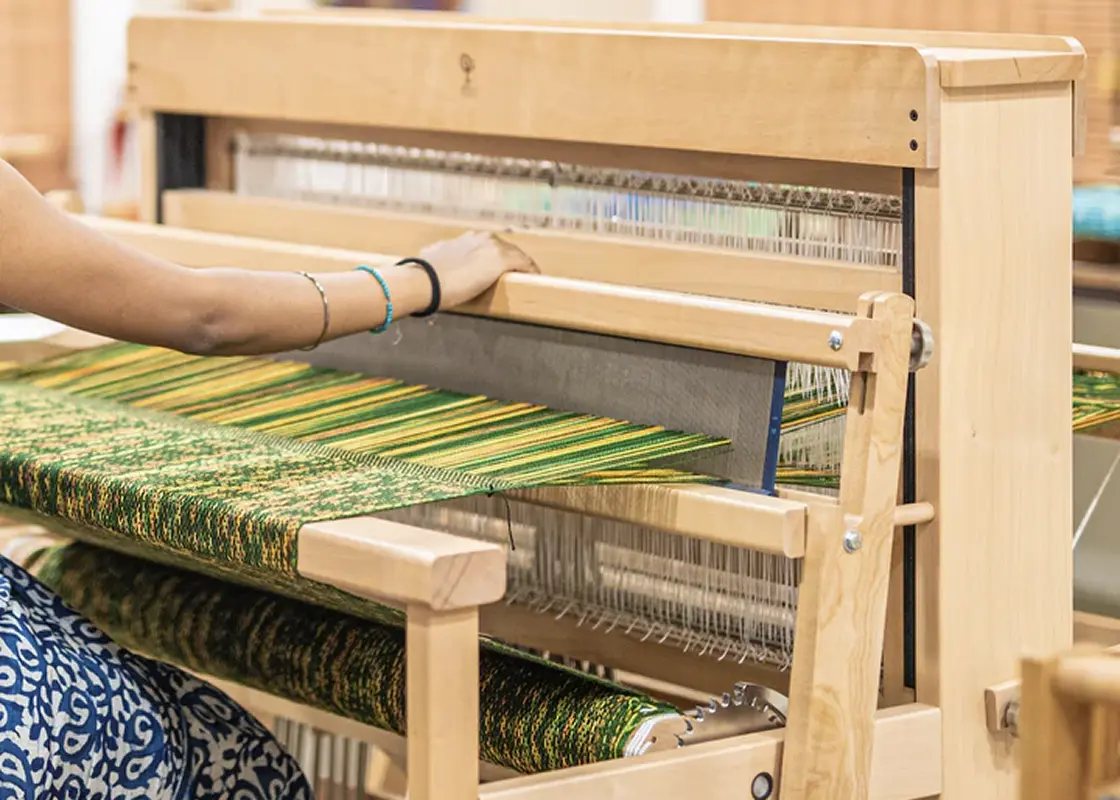
Jack looms are used when work requires greater width or prototype yardage. These treadle looms allow faster weaving and are suited to sampling as well as short production runs.
At the studio, jack looms support both design-led fabric development and production-oriented weaving, including work with clusters and specialised fibres such as pashmina.
Computer-Controlled Looms
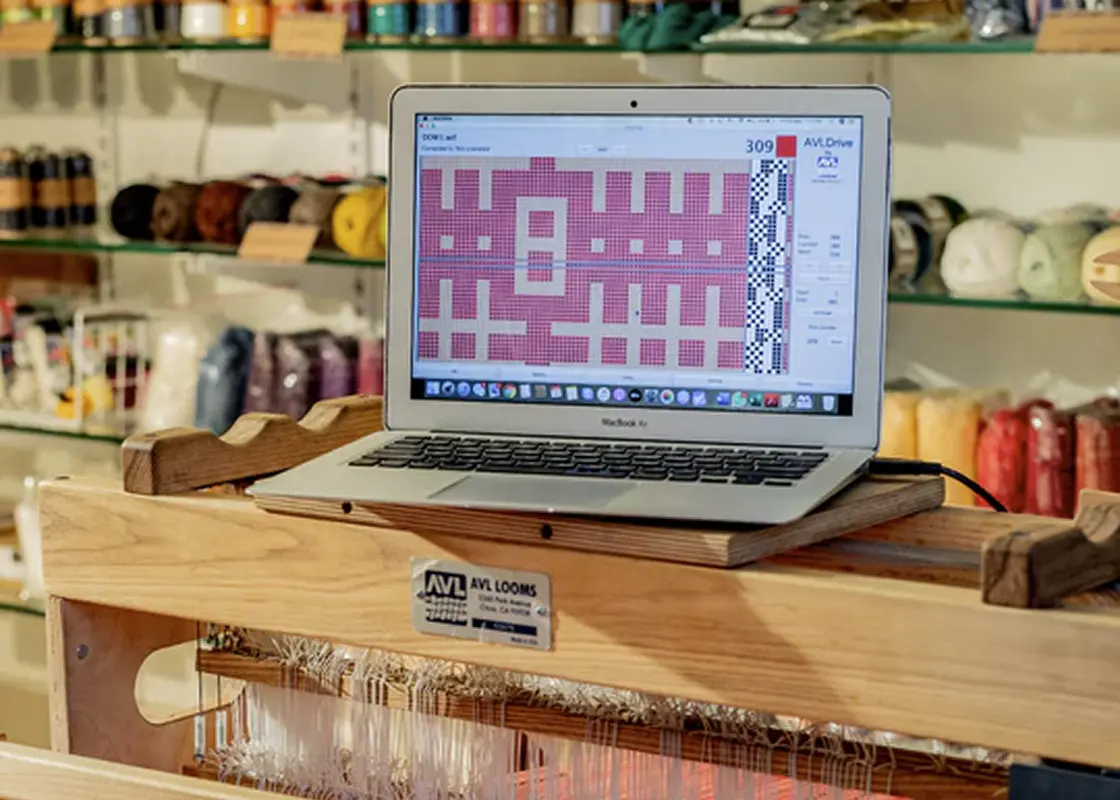
Computer-controlled looms are used when work demands precision in developing complex structures.
Weaving remains manual, while shaft selection is handled digitally, allowing designs created on the computer to be woven directly at the loom.
The studio works with computer-controlled dobby looms for design development and sustained fabric exploration, and supports institutions and studios in adopting appropriate dobby and jacquard systems.
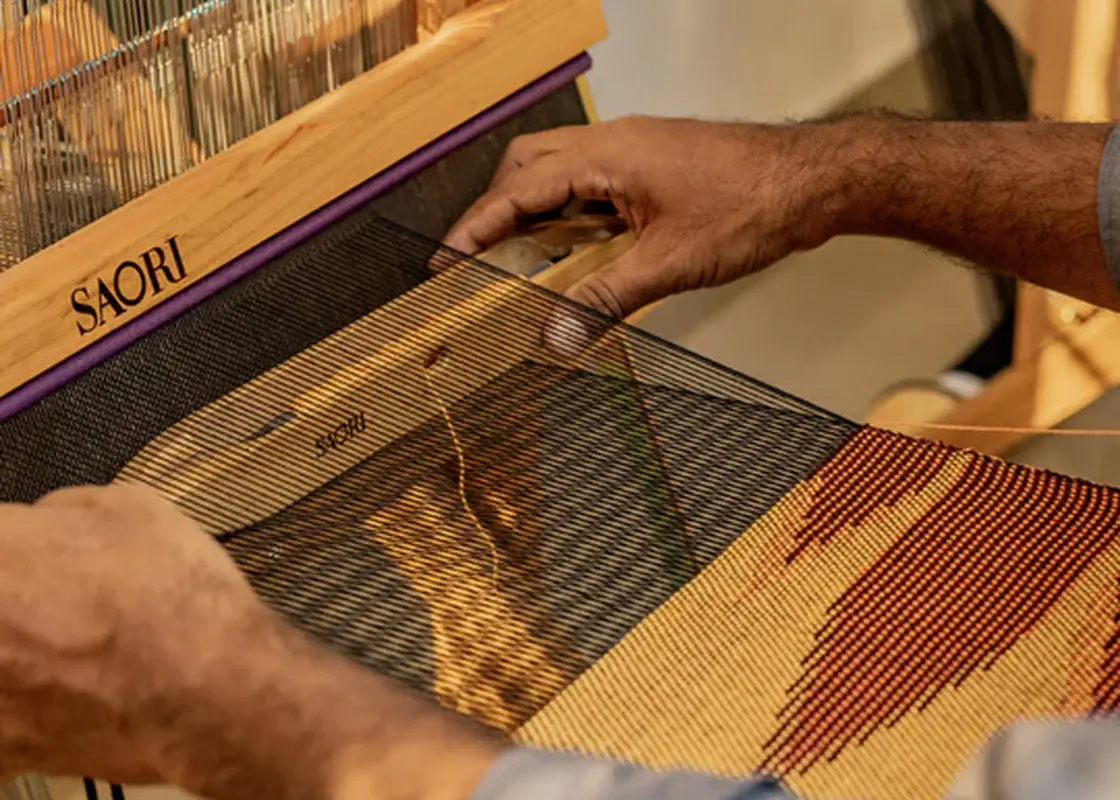
SAORI Looms
SAORI looms support an intuitive way of working at the loom, allowing the process to respond directly to material.
At the studio, they are used for exploratory weaving, teaching, and open-ended practice by people at different stages of engagement.
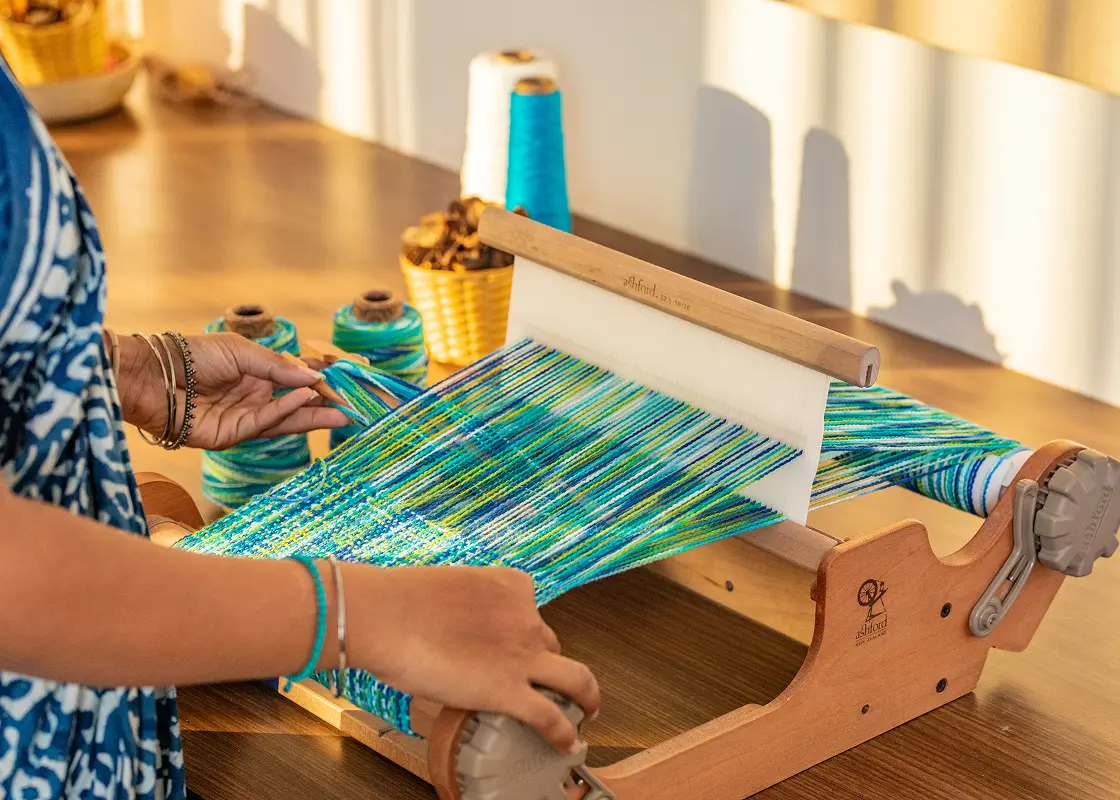
Rigid Heddle, Inkle, and Frame Looms
Rigid heddle looms are used as an accessible entry into weaving and for structured workshops.
Inkle looms are used for narrow fabrics and pattern exploration, including card weaving.
Frame looms are used for tapestry and pictorial weaving.
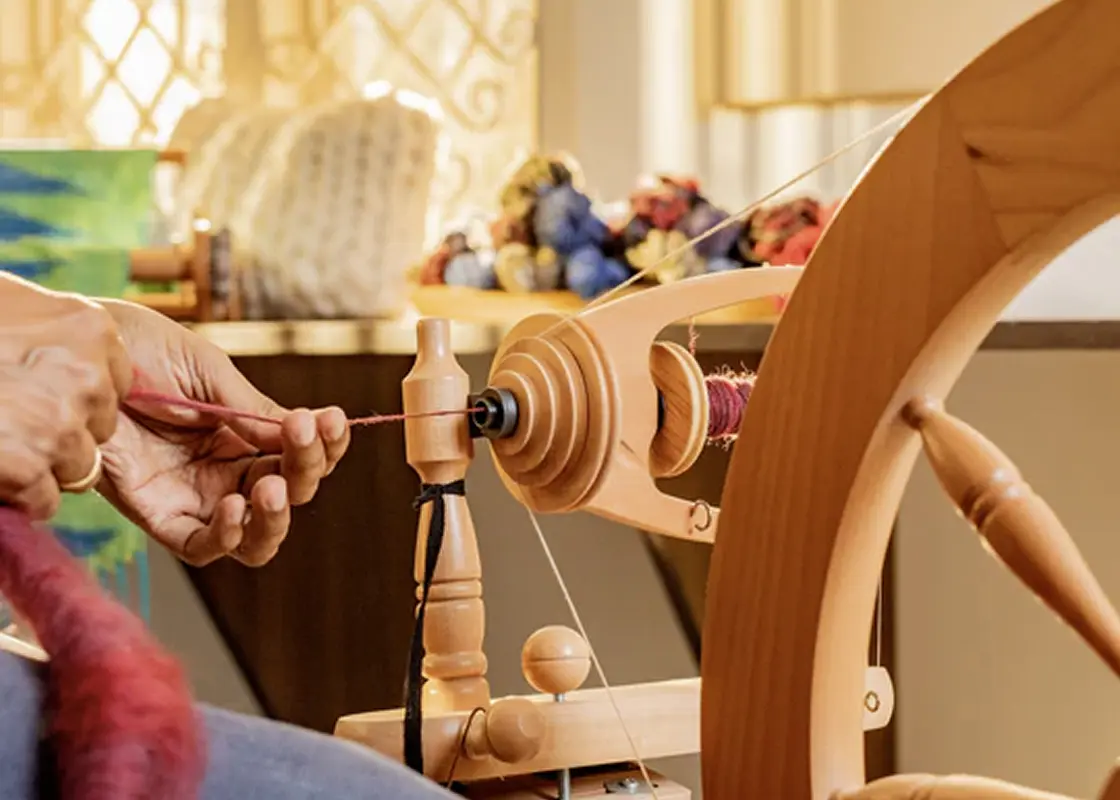
Spinning Wheels
Modern treadle wheels and e-spinners are used as part of material exploration, sampling, and ongoing studio work.
Spinning wheels support both individual practice and collaborative projects, including work with high-value fibres in social-sector contexts.
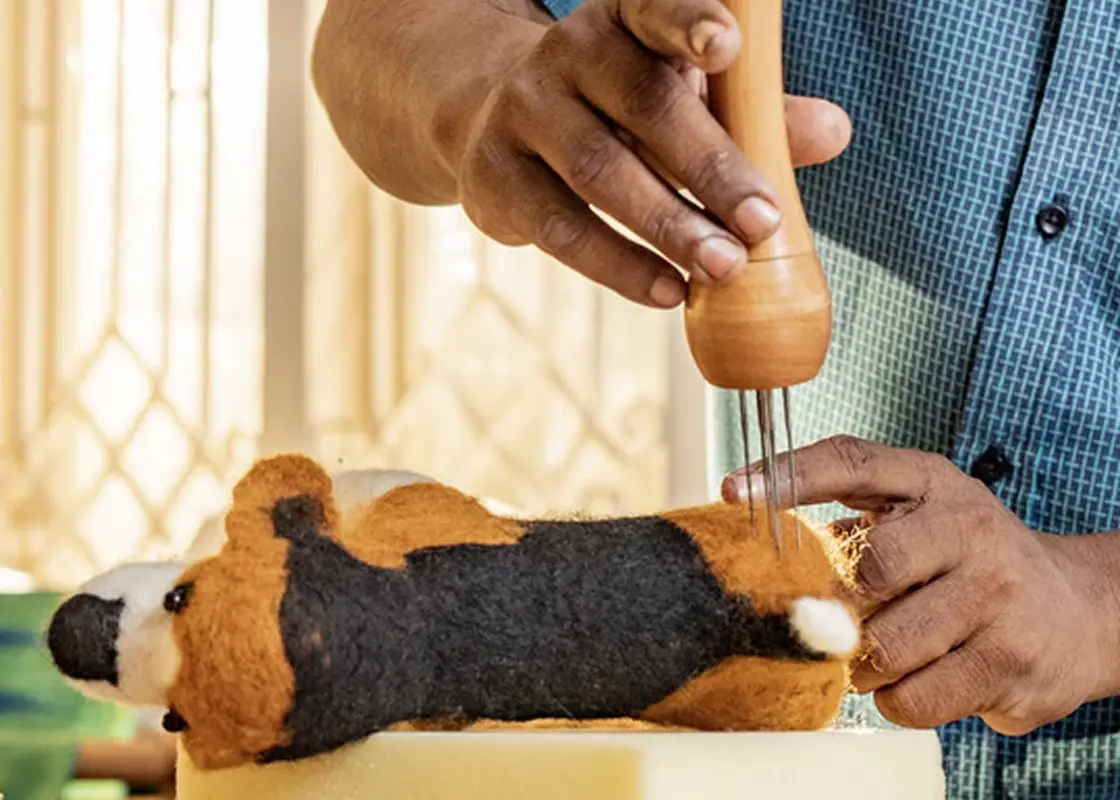
Fibre Arts and Felting Tools
Felting is an integral material practice at the studio.
The studio is equipped with hand carders and drum carders for preparing fibres. Felting is practised through needle felting, wet felting, and nuno felting.
Felting tools are used in workshops and have supported design projects developed by interns and students, resulting in felted and nuno-felted work across accessories, garments, and spatial objects.